Trosvik Oceantech AS recently delivered its first remotely operated underwater vehicle (ROV) for hull cleaning to the Panama-based ship service company Talleres Industriales S.A.
– After an extensive testing and approval process, the ROV is now fully operational, cleaning ships in the Panama Canal. The feedback from the customer has been extremely positive, says MD Svein Cato Rund of Trosvik Oceantech AS, a wholly owned subsidiary of Trosvik Group AS.
In cooperation with Eivind Eidissen, Svein Cato recently visited Panama to follow up on the delivery. The Panama Canal is one of the world’s busiest shipping passages. As one of the most important waterways connecting the Atlantic and Pacific Oceans, it also presents a highly critical environmental challenge. Why? We’ll get back to that shortly. But first, a bit about Trosvik’s patented Oceantech MultiCleaner ROV.
Trosviks MultiCleaner ROV
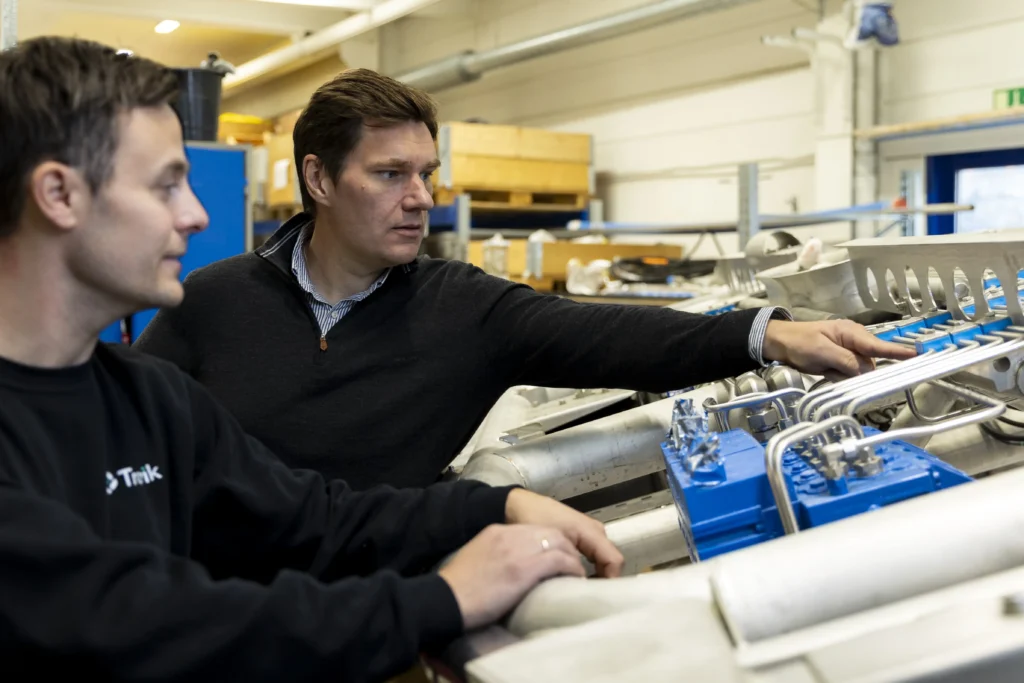
– Our MutiCleaner is a so-called Remotely Operated Vehicle (ROV). The version delivered to Panama is equipped with brushes. However, the ROV can also be supplied with a high-pressure cleaning setup. Using magnets and thrusters, the ROV can be safely and easily maneuvered around the ship via remote control. The brush or high-pressure system effectively removes growth and algae from the hull. At the same time, the operator can also perform inspections of the hull, propellers, and thrusters using cameras and sensors, explains Svein Cato Rund.
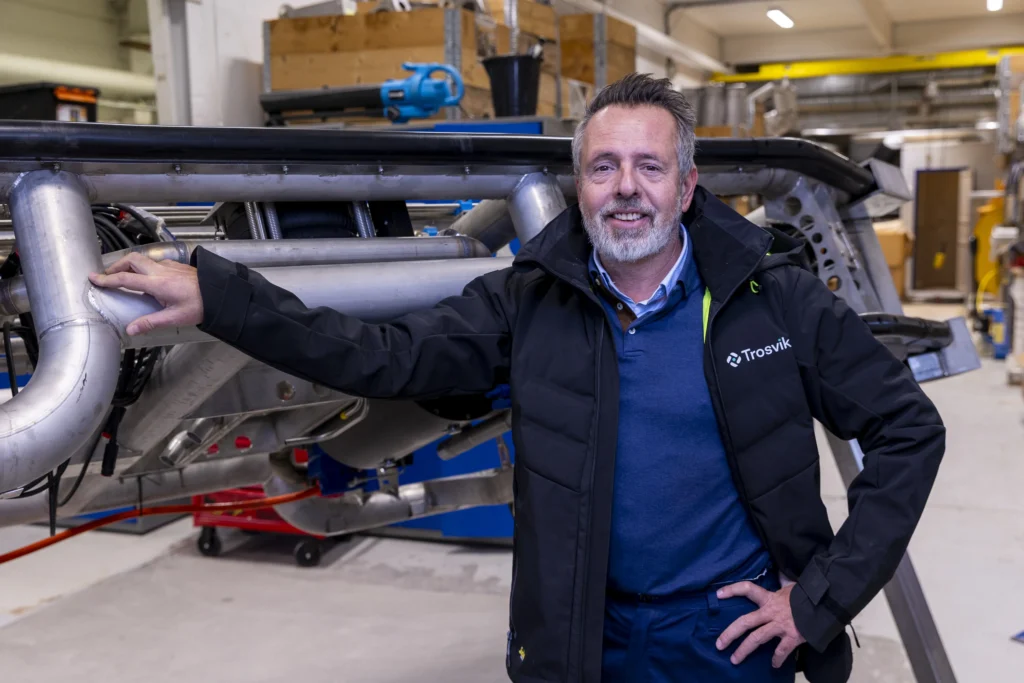
The ROV concept was acquired from Robert Andersen and is a further development of earlier units he produced. Robert is today an important supporter of Trosvik Oceantech and serves as a consultant when needed.
Satisfied customer
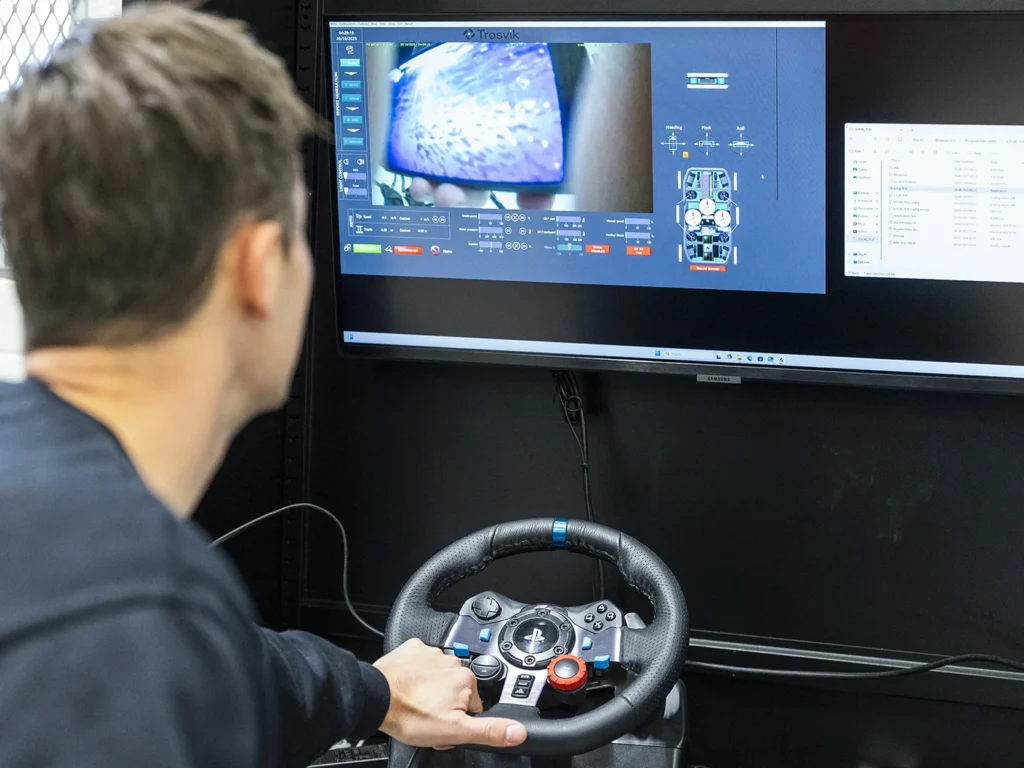
– After an extensive testing and approval process, the feedback from the customer has been very positive. Our ROV operator, Eivind Eidisson, has trained several operators among the staff at Talleres. The new operators report that the ROV is easy to maneuver. Even more importantly, they say it performs the actual cleaning job very quickly and efficiently.
Major player in ship services
Trosvik Oceantech’s customer, the Panama-based Talleres Industriales S.A., is a major provider of ship services on both sides of the Panama Canal. Hull cleaning represents a significant part of the company’s operations.
– It is a vote of confidence that this well-respected company has now tested, approved, and put our MultiCleaner ROV into operation, emphasizes Svein Cato Rund.
Enhances safety
Hull cleaning done the traditional way by divers is by no means risk-free. Unfortunately, there are many cases of professional divers being involved in accidents or drowning while performing hull cleaning.
Time is limited when ships are docked for loading or unloading—or anchored and waiting to enter port. In such situations, water currents are often very challenging, and the risk of unexpected incidents is high. The new method, using remotely operated vessels, helps eliminate these risks while also making the process more efficient.
Profitable for both shipping companies and the environment
Many shipping companies probably view hull cleaning as a purely cost-driven expense.
– The fact is that heavy growth and algae on a ship’s hull increase fuel consumption, and consequently, emissions. With cleaner hulls, the ship’s hydrodynamics are improved, reducing both fuel use and environmental impact. At the same time, maintenance needs and operational challenges on the vessel are also reduced.
But there is an even more important reason why ship hulls should be kept as clean as possible. As previously mentioned, the Panama Canal is not only one of the world’s busiest shipping passages—it also presents a highly critical environmental challenge:
Translocation of invasive species
The translocation of invasive species in the oceans poses a significant environmental threat worldwide. Non-native species are transported on ship hulls from one ocean to another. Local marine life becomes invaded, and in the worst cases, the consequences can be catastrophic. For this reason, effective hull cleaning is taken very seriously by port authorities around the world. Ports located near narrow shipping passages or shortcuts connecting one ocean to another are particularly vulnerable. Two examples are the Suez Canal and the Panama Canal. The Suez Canal serves as the waterway between the Mediterranean and the Red Sea for more than 20,000 vessels each year. In the Panama Canal, which connects the Atlantic and Pacific Oceans, up to 13,000 ships pass through annually.
In Norway, for example, we have experience with “Japanese sea squirt”. This invasive species forms large mats or layers on the seabed. The sea squirt covers the bottom and prevents local species from growing. In this way, it can completely displace other species such as shellfish, algae, kelp forests, and benthic organisms.
Trosvik’s ROV-team
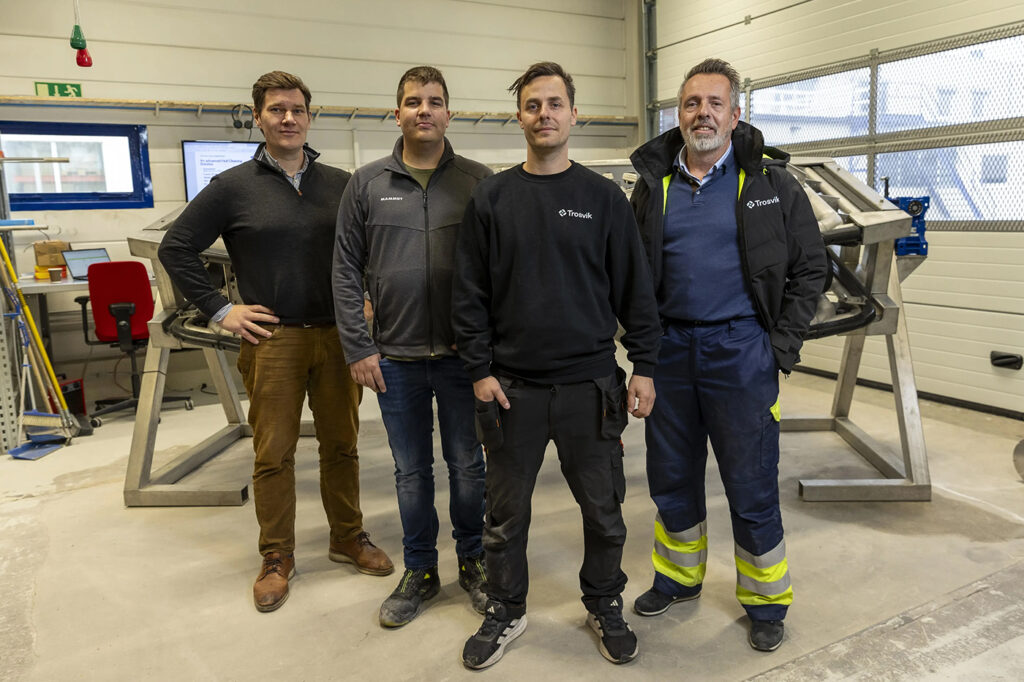
The MultiCleaner ROV team builds on the ROV concepts developed by Robert Andersen, and have a strong focus on development and sales. Marius Øverland, CTO at Trosvik for the past five years, has played a key role in the ROV initiative. Together with Svein Cato Rund and Eivind Eidissen, he has so far made up the core team responsible for design, construction, sales, and after-sales support. Starting in autumn 2025, Mads Furenes became an important addition to the team.
Stricter regulations at sea
– A tightening of current maritime regulations is expected worldwide, including rules affecting activities outside ships, such as hull cleaning. Trosvik aims to design and develop a ROV concept that can also meet these new requirements, concludes Svein Cato Rund, Managing Director in Trosvik Oceantech AS.