There was great excitement among Trosvik employees last autumn when the group secured the contract to build the two new vessels in the Reach Remote fleet. One of the happiest was Geir Sæther. He is the Project Manager for the construction of the vessels—and knows exactly what he’s taking on. He also led the construction of the first two sister ships.
Read also: Trosvik to Build the Next Two Reach Remote Vessels!
Challenging Vessels to Build
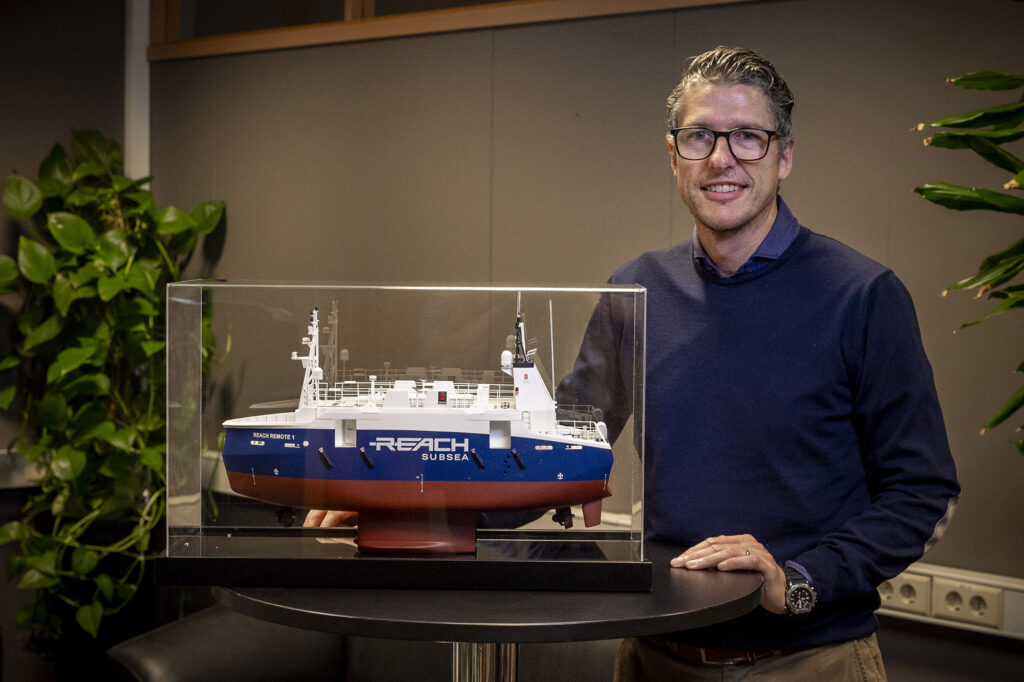
Reach Remote is a unique remotely operated and unmanned inspection vessel, a so-called USV (Unmanned Surface Vessel). The vessel is packed with advanced technology and is considered one of the most technologically sophisticated in its segment.
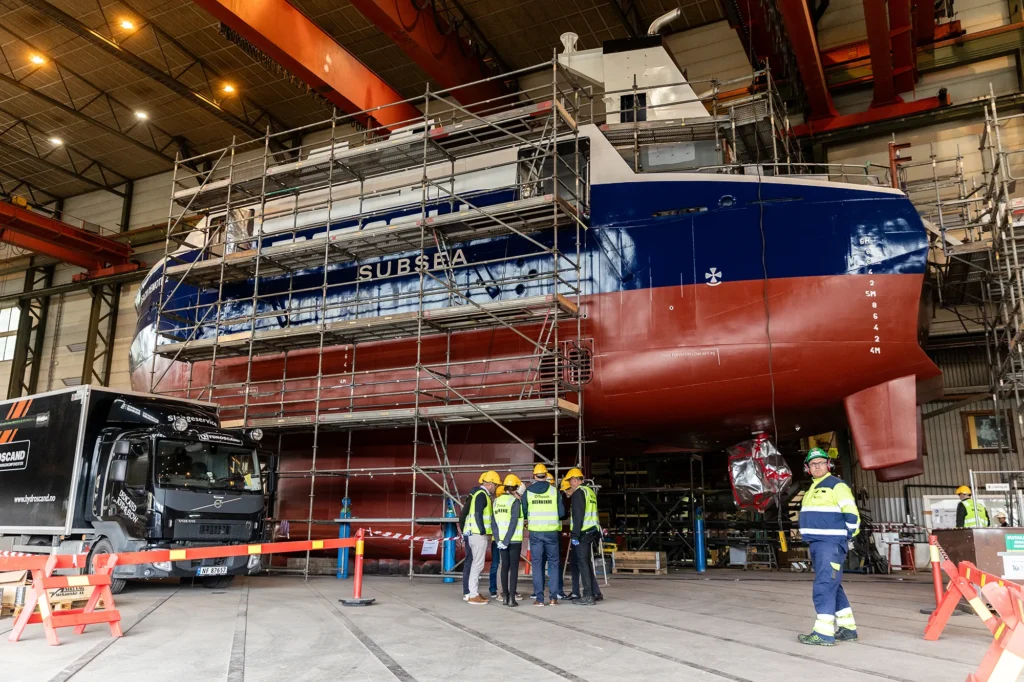
– It is also one of the most challenging vessels to build. A huge amount of equipment has to be installed in an extremely compact vessel, says Geir Sæther.”
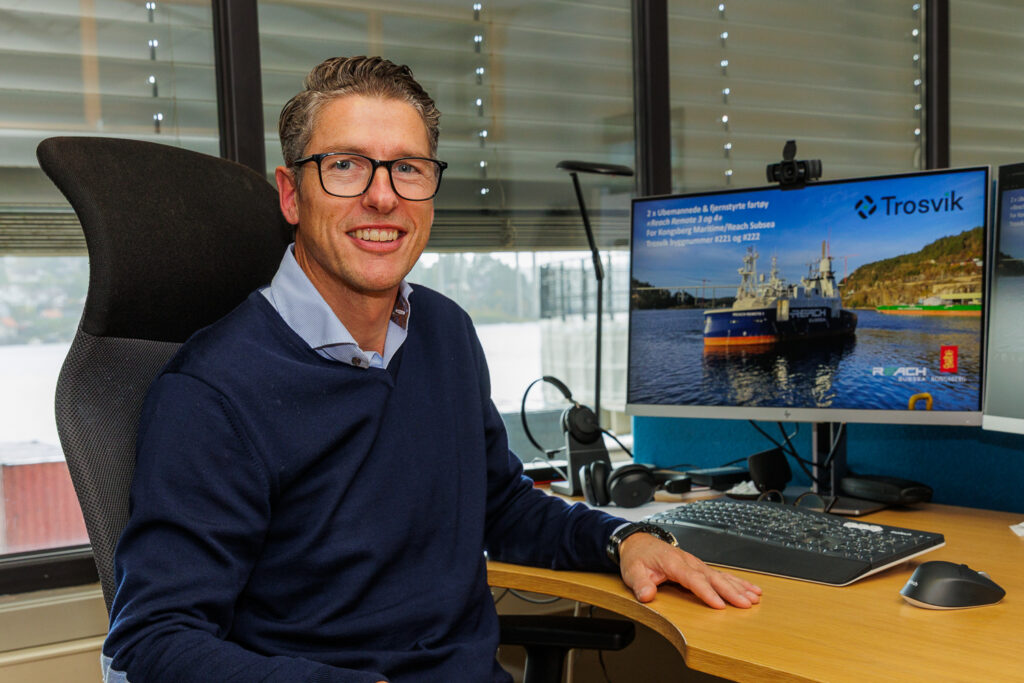
Geir was also Trosvik’s Project Manager for the construction of the first two vessels in the Reach Remote fleet.
He has extensive experience from both maritime and land-based industrial projects. Still, he says that the construction of the Reach vessels is among the most challenging projects he has ever overseen.
Took the ‘Exam’ on Reach Remote 1 and 2
The construction of the first two Reach Remote vessels provided Trosvik with valuable expertise and experience in pioneering shipbuilding and maritime technology.
– Thanks to our client, Kongsberg Maritime, we get to be part of a pioneering project in shipbuilding. Vessels like this have never been built before. They are small and extremely compact—about 25 meters long and 8 meters wide. Within this limited space, a huge amount of equipment and technology must be installed.
– I won’t deny that the challenges were almost endless during the construction of the very first vessel. It was almost like taking an exam, he says with a smile.
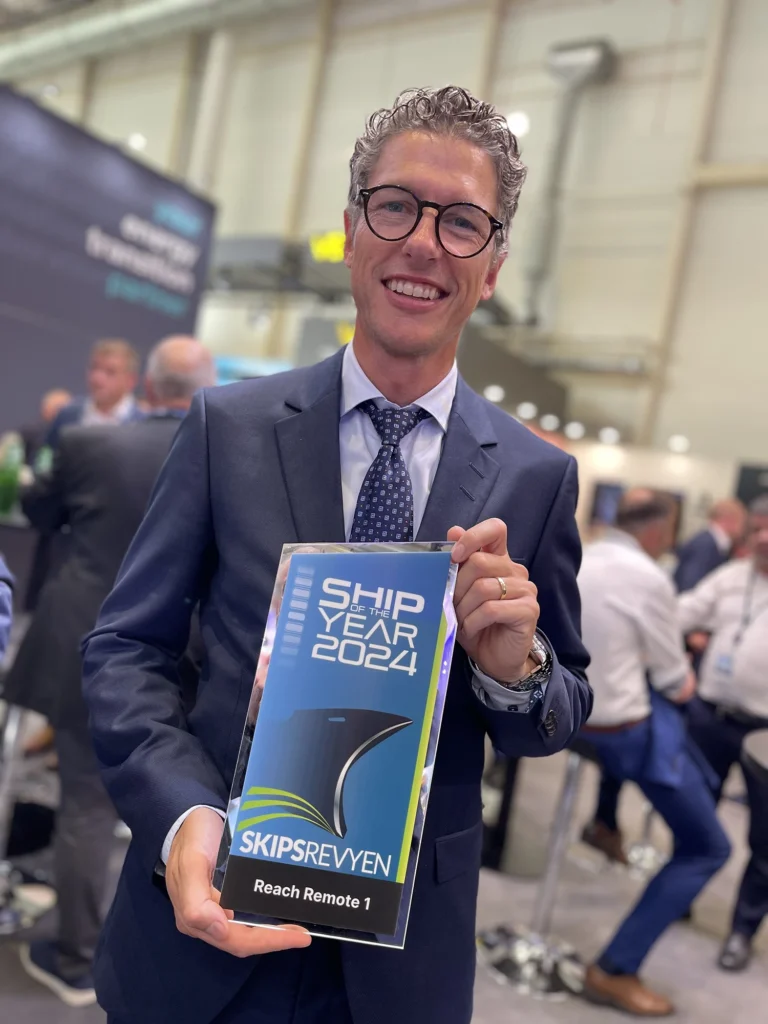
Trosvik successfully completed its first construction project. When Reach Remote 1 was later named ‘Ship of the Year,’ there was every reason for Trosvik’s project team to celebrate the milestone with a champagne toast on board the vessel.
Also read: Trosvik’s first newbuild was “Ship of the Year 2024”!

Advanced autonomous ship technology
Kongsberg Maritime developed the concept, technology, and design for the Reach Remote vessels. The client and end customer is the Haugesund-based shipping company Reach Subsea, a world-leading player in subsea operations.
Kongsberg Maritime is a leading innovator in remotely operated and autonomous technology. The vessels in the Reach Remote fleet are equipped with some of the most advanced autonomous technology available today. The contracts for the two new vessels represent an important milestone and confirm the company’s position in remotely operated and unmanned surface vessels as well as ROV operations.
This Is Why They Are the World’s Most Advanced
The unmanned surface vessels (USVs) will be used for underwater inspections and basic subsea operations with the help of remotely operated underwater vehicles (ROVs).
– The vessels are equipped with technology that enables remote operation of both the USV and ROV, without any crew on board during navigation. To date, there are no other vessels that can be operated in this way,” says Geir.
– The vessels will also serve as mobile energy banks, data centers, and communication platforms for ROV operations. Both the vessels and ROVs can be operated remotely from shore-based control centers. Operations can be conducted remotely, autonomously, or using a combination of both, he explains.
Extensive Installations in Limited Space
The advanced technology on board requires an extensive infrastructure for power and communication.
– In a relatively small vessel, a tremendous amount of equipment must be installed, and all of it requires power. Each vessel uses several kilometers of cabling. The workspace on board is limited—only a few people can work simultaneously in each area. This places high demands on sequencing, logistics, and staffing, explains Geir.
Capable of Operating Worldwide
The Reach Remote vessels will primarily be used for subsea operations, such as inspections and light maintenance tasks on seabed installations.
Typical clients are oil companies and operators responsible for subsea cables and gas pipelines. Operational limitations will mainly be related to water depth and wave conditions.
The vessels can operate worldwide—remotely controlled from shore-based control centers in Norway. Reach Remote 1 is currently carrying out operations for Equinor in the North Sea, while Reach Remote 2 is on a long-term assignment in Australia.
Scheduled for Delivery in 2027
Reach Remote 3 and 4 are scheduled for delivery in the second and third quarters of 2027. The hulls will be built by Trosvik’s partner, the Polish shipyard FINOMAR Spolka z o.o. in Szczecin. The hull of the first vessel is planned to be delivered in the third quarter of 2026.
-The estimated construction period for each vessel is around 20 months. One advantage is that during the winter months we can keep the ships inside the fabrication hall. This allows us to work in dry and warm conditions, which is also important for the sensitive equipment on board, concludes Trosvik’s Project Manager, Geir Sæther.